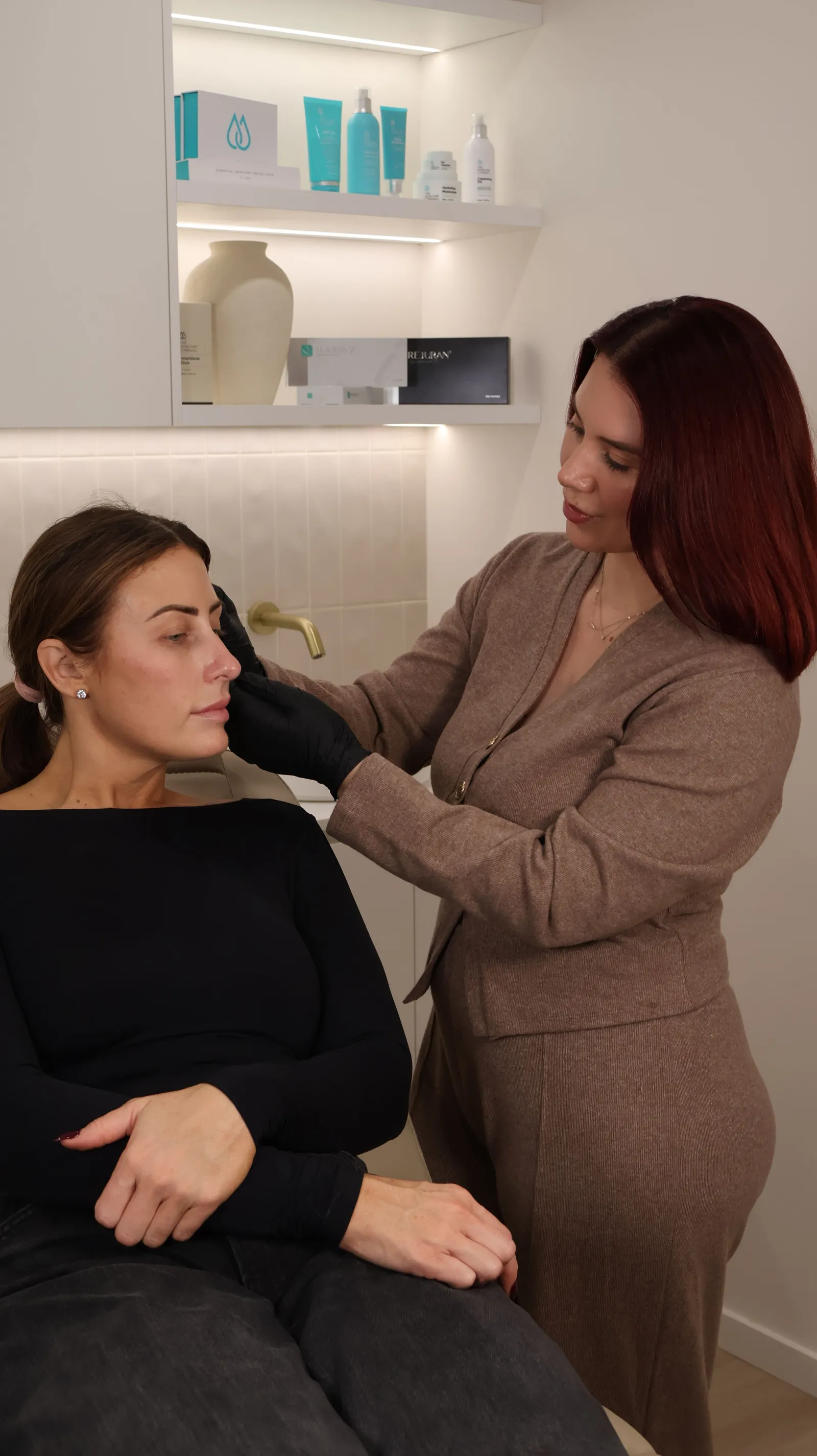
How skin needling works
Skin needling uses very fine needles to create tiny, controlled channels in the skin. Those small points of stimulation prompt your skin's natural healing response, which supports collagen and elastin production in the weeks and months that follow.
It's your own skin doing the work. The treatment simply encourages a process your skin already knows how to do.
Because of that, changes build gradually and continue developing well after your appointment. It's a treatment that rewards patience, and one that works beautifully as part of caring for your skin over the long term.
Depending on your skin, needling may be performed on its own or paired with a skin booster to further support hydration and overall skin quality.
What skin needling can support
Skin needling is one of the more versatile treatments, which is part of why it's so widely used. Depending on your skin, it may be considered for:
- Overall skin texture and smoothness
- Acne scarring
- The appearance of pores
- Fine lines
- Dull or tired looking skin
- Skin firmness and overall skin quality
- Supporting your skin's natural collagen production over time
Most of these concerns have more than one thing contributing to them, which is why the way needling is used will look a little different from person to person. The depth, the areas treated and how it fits alongside the rest of your skincare are all tailored to your skin.
What to know before you book
Timing matters. Because skin needling works with your skin's own repair process, changes develop gradually rather than immediately. Most people find it sits best in their calendar with a little breathing room around it rather than in the days before something important.
Your skin barrier comes first. Needling works best on skin that's calm, comfortable and well supported. If your skin is feeling sensitised or reactive, a short period of focused skincare beforehand often means a better result and a more comfortable treatment.
A few things affect suitability. Some skin conditions, certain medications, active breakouts, pregnancy and breastfeeding can all influence whether needling is appropriate right now, or how it's approached. It's always worth mentioning these so we can plan around them.
It's a series, not a single appointment. Skin needling tends to build. Most plans involve a few treatments spaced several weeks apart, with the number tailored to your skin.
What to expect
Before your treatment During your personalised consultation, we'll go over your skin, your medical history and what you're hoping to see, then talk through what needling would involve for you specifically. You'll leave knowing what's realistic and what your plan looks like.
On the day Your skin is cleansed and prepped, and we'll talk through the plan before we begin. Most people find needling very manageable and describe it as a light vibration or scratching sensation rather than pain. Numbing isn't always needed, and where it is, such as when we're working at a deeper setting, it's applied beforehand and given time to take effect. Treatment time varies depending on the areas being treated.
Afterwards It's normal for skin to look flushed, a little like mild sunburn, and to feel warm or tight for a day or so. This usually settles over the following one to three days. You'll go home with clear written aftercare and we'll talk through what to use, what to pause, and sun protection.
In the weeks that follow Your skin keeps working long after your appointment. Collagen production continues over the following weeks and months, which is when most people start to notice their skin looking smoother and feeling healthier.
Staying in touch You're always welcome to message me between appointments, whether that's a question about healing, your skincare, or simply wanting reassurance. That's part of your ongoing care.

A Note from Stephanie
Skin needling is one of the treatments I come back to most, and I think that's because it's so quietly reliable. It isn't dramatic and it isn't fast, but it does something I really value: it improves the health and quality of your skin, rather than changing your face.
I love the treatments where someone comes back a few months later and tells me their makeup is sitting better, or their skin just feels healthier and more comfortable. That's usually the moment they realise the slow ones are worth it.
It's also a lovely place to begin if you're new to all of this. There's something reassuring about a treatment that works with your own skin, at a pace you can see unfolding.
Stephanie
Frequently asked questions
Is skin needling painful?
Most people find it very manageable. It's usually described as a light vibration or scratching sensation rather than pain, and your comfort is checked throughout. Where numbing is appropriate, it's applied beforehand.
Which areas can be treated?
Skin needling isn't limited to the face. It can also be used on the neck, décolletage and areas of the body, including for concerns like scarring, stretch marks and overall skin texture. Which areas we treat, and how, is based on your skin and what you're working towards.
How much downtime is there?
It's normal for skin to look flushed, a little like mild sunburn, and to feel warm or tight afterwards. This usually settles over one to three days, though it varies from person to person.
How many treatments will I need?
Skin needling tends to build, so most plans involve a few treatments spaced several weeks apart. The number is tailored to your skin and what you're working towards.
When will I notice a change?
Because needling works by supporting your skin's natural collagen production, changes develop gradually over the weeks and months following treatment. Individual results vary.
Can I wear makeup afterwards?
It's best to let your skin have a clear day or so before returning to makeup. We'll go through exactly when to reintroduce things as part of your aftercare.
Can I have skin needling while pregnant or breastfeeding?
This is assessed individually, so please let us know so we can guide you appropriately.
Is skin needling suitable for deeper skin tones?
Yes. Skin needling is generally well suited to a wide range of skin tones because it works through controlled physical stimulation rather than heat or light.